Africa Travel Tips

Passports and Visas
You should have a full passport valid for at least six months after the end of your safari. It is advisable to allow at least one blank page for each country to be visited. If your passport is almost full you may find yourself unable to complete the tour. Note: it is advisable to bring a photocopy of your passport in case you lose the original.
Visas are your responsibility. Please check visa requirements with the consular office of each country that you will be visiting. Alternatively, consult your agent or us. You should allow plenty of time for obtaining necessary visas (and see our Visa info section). In Africa, most visas can be obtained en-route.
Vaccinations
Please consult your GP, doctor or immunisation centre for the relevant vaccination requirements for the countries to which you will be travelling. Please note, however, that a Yellow Fever vaccination is compulsory for most African countries. In addition for African safaris, we would recommend vaccinations for typhoid, polio, tetanus, hepatitis, meningitis, and perhaps, cholera. Note: you should have a photocopy of your Yellow Fever Certificate in case you lose the original.

Medical
We would strongly advise you to bring a personal medical kit. Any reputable medical store like Boots or Nomad will be able to provide this for around £10-£20 HOWEVER you will probably need to add extras like Nurofen, or Imodium or mozzie spray (minimum DEET 50)..
Suggested contents includes:
Lip balm
Anti-histamine cream or tablets
Sunscreen
Water purifying tablets
Pain killers
Anti diarrhoea remedy
Moisturiser
Elastoplasts/band aids
Insect repellent (DEET 50 minimum)
Sterile dressings
Antiseptic cream
Malaria is endemic in most parts of Africa. It is your responsibility to provide anti-malaria tablets and other preventative measures. You should consult your doctor as to the correct prophylaxis for the countries to be visited. It is also useful to avoid being bitten through the use of an insect repellent containing DEET and wearing long sleeved shirts and trousers at night.
Insurance
Personal travel insurance is compulsory for all our safaris. This should include a comprehensive medical cover including repatriation, personal effects and luggage, as well as cancellation and curtailment insurance. If you are in any doubt as to the cover you need, please contact either your agent or us. Note: Please bring a photocopy of your Insurance Policy and hand to the trip leader at the pre-departure meeting. Global Village’s policy covers for overlanding and repatriation - See http://www.globalvillage-travel.com/insurance.asp for more details

Luggage and what to bring:
As a guide we recommend you keep to your airline's restriction ie: 20kg or less.
Most people bring along a backpack (the normal size is 50-70 litre capability preferably with built-in frame) and a day bag (usually a smaller 10-20 litre rucksack). Large suitcases are not recommended, as these can be difficult to store on the truck. Most people make the mistake of bringing too much clothing. Clothes should be easy to wash and dry, but avoid nylon and other synthetics, which can be very uncomfortable in hot weather. Please remember that Africa can be colder than you might expect, particular at night and in the early morning.
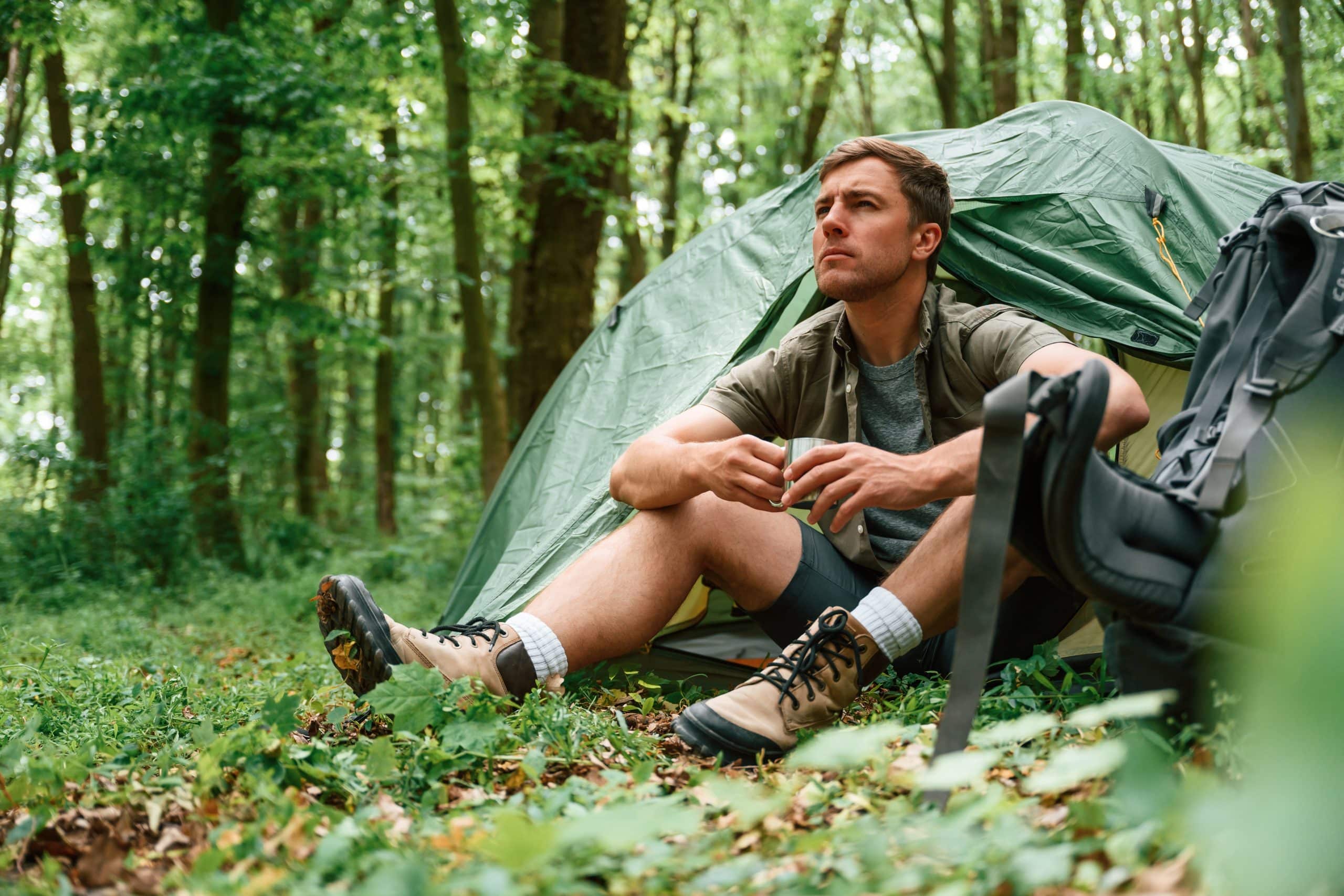
Its also worth knowing that we provide 2 man tents and camping equipment, but you need to bring along your own Sleeping Bag and Sleeping Mat/Thermorest.
Cotswolds Outdoors do this one below for about £30.

We thinks its worth getting a thermorest (a self inflating mat) - theyre available in Blacks of Greenock, Snow and Rock, Cotswolds Outdoors or any decent camping store. Blacks do a budget one from £40.
Also get a sheet sleeping bag (a kind of inner lining sleeping bag - theyre very easy to make - fold a double sheet in half lengthwise and sew up the sides and bottom - takes 20 mins or take it to a dry cleaners/tailors and theyll do it on a sewing machine for a couple of pounds. Sheet sleeping bags, especially if you use a cotton sheet, will also make youre journey so much more comfortable and they last for ages. Blacks of Greenock do one for about £15.
The following is a suggested list of clothing and accessories:

2 long sleeved shirts/blouses
Money and traveller's cheques
3-4 short sleeved shirts or T-shirts
Vaccination certificates
2 pairs trousers or 1 pair and 1 skirt
Passport (plus photocopy)
1-2 pairs shorts
Camera and film
Tracksuit pants
Personal toiletries and towel
Heavy sweater
Water bottle
Light sweater
Watch (inexpensive)
Underwear
Sunglasses (inexpensive)
Hat
Torch and spare batteries
Water/windproof jacket
Small sewing kit
Boots or trainers
Washing soap for clothes
Sandals or thongs
Plastic bags
Set of smart clothes and shoes
Clothes line and pegs
Swimsuit
Small scrubbing brush
Sleeping bag, sleep sheet and roll mat
Penknife
Music (our vehicles are equipped with stereos)
If you wear glasses (or contacts) it is also advisable to bring a spare pair.
If you wish to sleep out on warm nights you will need to bring a mosquito net and ground sheet.

Local Payment
All passengers contribute to the Local Payment for each of our safaris equally. It is payable to the representative of our ground handler in Moshi on day 1 of your safari. Payment should only be in US dollars cash. We have calculated the Local Payment amount from our experience in running trips in and around Africa. As stated we calculate the Local Payment contribution of each trip based on previous experience. However we often have to publish Local Payment contributions a year or two prior to the time the particular trip enters a country, and it is impossible to anticipate exactly how exchange rates, local inflation and price rises may change so far in advance. It very rarely happens that extra contributions have to be made, but if it does prove necessary, it is usually only a few dollars and is usually because a group has been particular extravagant or unlucky.

Security
We cannot stress enough the need for you to be aware whilst travelling in Africa. Please do not bring unnecessary valuables along with you such as jewellery or expensive watches. We also recommend that you photocopy all your travel documents including the first 4 pages of your passport and keep them aside from the originals.

Spending Money
Well, only you know to what extent your spending habits will tax you ie: whether you smoke or drink, what souvenirs you are most probably wanting to buy, or any extra excursions you may want to do. Africa is not as cheap as a lot of the travel books have you to believe and as such we would recommend that you allow, in addition to the listed optional excursions in our brochure, a figure of US$20 to US$30 per day.

It is advisable to bring spending money in both cash and travellers cheques, preferably in US dollars or pounds sterling, or both. Cash should be in a variety of denominations, and travelling to East Africa, please make sure that US dollar notes are post 2000.
Travelling in Africa is unpredictable.
Our safaris are not luxury tours and trips of this kind do not always proceed as planned. If you approach your trip with a spirit of adventure and a positive attitude, you and your fellow travellers will get the most out of the journey. Due to reasons of health, security, or circumstances beyond our control, it may be necessary to make alterations to the planned itinerary. If this is unavoidable the Leader will make the final decision on changes after discussing the issue with the group. Obviously the Leader will bear in mind the wishes of the group, although there may well be occasions when unpopular decisions have to be made.
In all matters relating to the trip the Leaders decisions will be final.
Whilst on Safari
We ask you to preserve the countries that you will be travelling through as much as possible, and as such, please do not drop or leave behind litter.

Local laws and Customs
We ask that each passenger obey all the laws of the countries we are travelling through. Any passenger found in possession of contraband, non-prescribed narcotic drugs or firearms will be asked to leave the trip immediately, with no refund of the tour fare. All of the countries you will be travelling through will have their own individual customs, please respect them.

Photography
Naturally, there are many opportunities for photography in Africa. As film can be very expensive in many countries that you will be visiting we suggest you bring plenty from home. It is also advisable to bring a re-sealable polythene bag to keep dust from your equipment. A note of warning: Under no circumstances should you attempt to photograph government buildings, police, military personnel or any government official. This applies especially at borders. It is not unknown for people to have cameras confiscated if officials even suspect a photo has been taken. If in doubt, ask.

Read Customer Comments